
How Long Does Teeth Sensitivity Last After Whitening?
You have just had your teeth whitened, and now cold water feels like it is hitting a nerve.
That sudden sharp “zing” can catch you off guard. One minute your teeth look brighter, and the next you are thinking twice before taking a sip of water or breathing in cool air.
Sensitivity after whitening is a recognised side effect and is usually temporary. How long it lasts can vary from person to person, depending on factors such as your existing tooth sensitivity, the condition of your enamel and dentine, and the whitening method used.
At Complete Smiles in Rozelle, patients often ask how long post-whitening sensitivity should last and when discomfort is worth having checked.
In many cases, sensitivity is most noticeable soon after whitening and gradually improves. However, there is no exact recovery timeline that applies to everyone.
Here is what may be happening and what you can expect.
Why Does Teeth Whitening Cause Sensitivity?
Whitening treatments generally use bleaching agents to penetrate the tooth structure and break down coloured molecules responsible for staining.
Beneath the enamel is a layer called dentine. Dentine contains microscopic channels called dentinal tubules, which communicate with the inner part of the tooth where the dental pulp and nerves are located.
During and shortly after whitening, teeth can become temporarily more responsive to temperature and other stimuli. This may cause the brief, sharp sensations many people associate with post-whitening sensitivity.
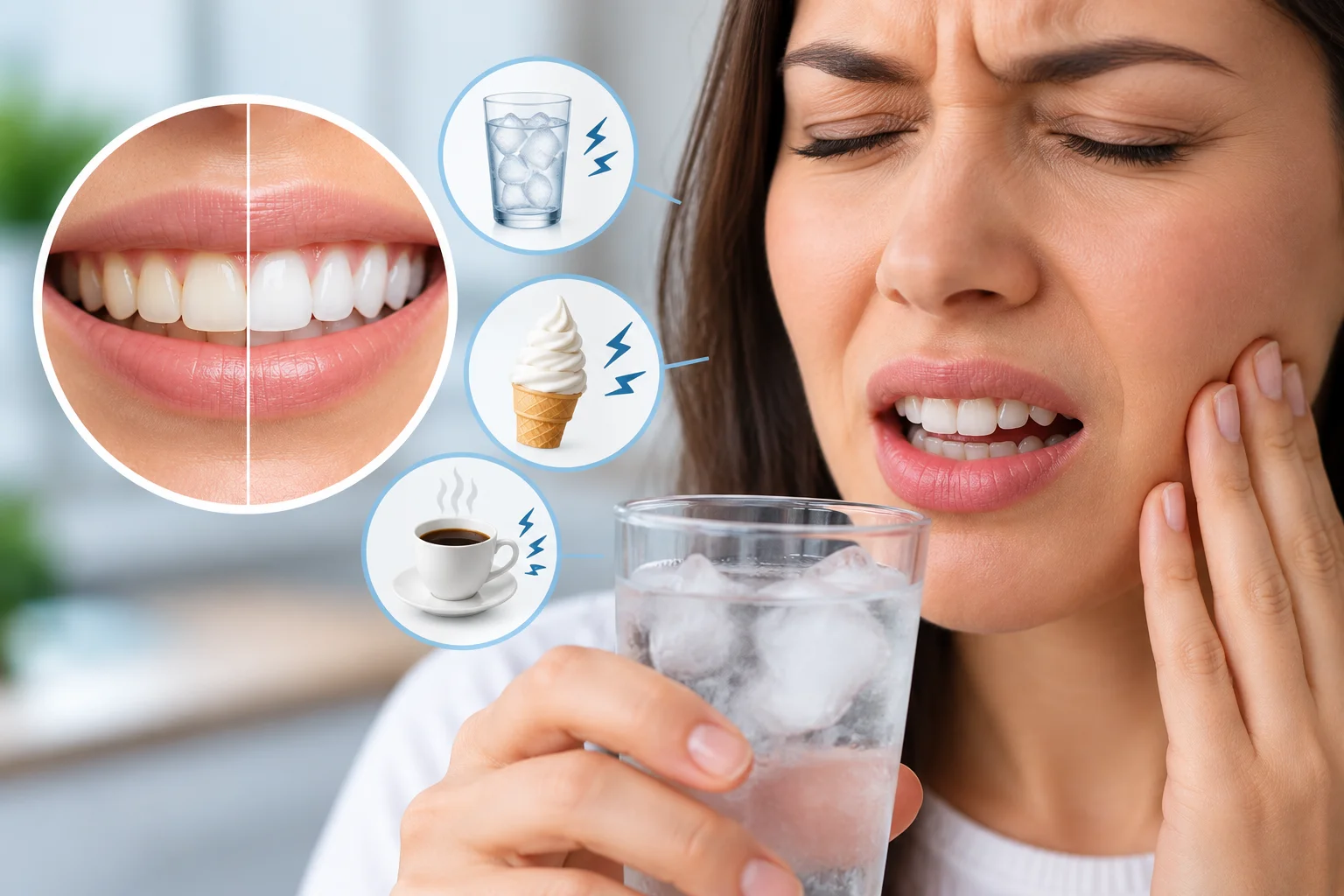
You might notice sensitivity when:
- Drinking cold water
- Eating chilled foods
- Breathing cool air through your mouth
- Having something very hot
- Brushing your teeth
After teeth whitening teeth may become sensitive to cold after and that the gums and other soft tissues can also become irritated.
This sensitivity does not necessarily mean something has gone wrong. However, severe, persistent or localised pain should not automatically be assumed to be a normal whitening response.
How Long Does Sensitivity After Whitening Usually Last?
There is no exact timeframe for everyone.
Some people experience sensitivity for only a few hours, while others may notice it for several days.
The Australian Dental Association’s information on sensitive teeth explains that sensitivity following dental treatment is usually temporary and may last for several days or, in some situations, longer.
The important point is the overall pattern.
Sensitivity associated with whitening would generally be expected to improve rather than become progressively worse.
Factors that may influence how long sensitivity lasts include:
- Whether your teeth were sensitive before whitening
- Enamel wear
- Exposed dentine
- Gum recession
- Cracks or other dental concerns
- The whitening product and concentration used
- How frequently whitening is performed
- How your individual teeth respond to treatment
If your teeth remain significantly sensitive or the discomfort is not improving, arrange a dental assessment rather than relying on a fixed recovery timeframe.
What Can the First Few Days After Whitening Feel Like?
Everyone responds differently, so the following is a general guide rather than a guaranteed timeline.
The First 24 to 48 Hours
Sensitivity may be most noticeable during the first day or two after whitening.
Cold drinks, cool air and temperature changes may trigger short, sharp sensations. Some people notice very little discomfort, while others find their teeth noticeably more reactive.
If the symptoms are mild and gradually improving, they may simply represent a temporary response to the whitening treatment.
The Next Few Days
For many people, sensitivity becomes less noticeable over the following days.
You may find that ordinary food and drink temperatures become more comfortable and that any sharp sensations occur less frequently.
Continue to monitor how your teeth feel rather than assuming that a particular number of days guarantees everything is normal.
Around a Week or Longer
Sensitivity that remains noticeable around a week after whitening is worth discussing with your dentist, particularly if it has not improved.
This does not automatically mean something is wrong. Some teeth take longer to settle.
However, ongoing sensitivity may also have another cause that warrants investigation, especially if the discomfort is:
- Severe
- Increasing
- Constant rather than brief
- Focused mainly on one tooth
- Triggered by biting
- Accompanied by swelling
A dentist can determine whether your symptoms are consistent with temporary whitening sensitivity or whether another dental issue may be contributing.
Why Do Some People Have More Sensitivity Than Others?
Two people can undergo similar whitening treatment and experience very different levels of sensitivity.
This may be influenced by existing dental conditions and individual tooth anatomy.
Sensitivity can be more noticeable when there is:
- Pre-existing sensitive teeth
- Exposed dentine
- Gum recession
- Enamel wear
- Tooth decay
- Cracks or damaged restorations
- Exposed root surfaces
Whitening may make an existing sensitive area more noticeable, even if it had only occasionally caused symptoms beforehand.
This is one reason a dental check-up at Complete Smiles can be useful before whitening.
A dentist can examine your teeth and gums, assess existing sensitivity and identify dental concerns that may need attention before cosmetic whitening is considered.
What Can Help With Sensitivity After Whitening?
You usually do not need a complicated routine while your teeth settle.
The main aim is to avoid unnecessary sensitivity triggers and follow the whitening instructions provided by your dental professional.
Avoid Very Hot or Cold Foods and Drinks
Extreme temperatures may trigger sensitive teeth more easily after whitening.
For the first few days, room-temperature or lukewarm food and drinks may be more comfortable than ice-cold water or very hot beverages.
Consider a Desensitising Toothpaste
A toothpaste designed for sensitive teeth may help some people.
Desensitising toothpastes contain ingredients that can reduce the response of sensitive teeth to triggers such as cold temperatures. They may not work immediately, and they will not treat sensitivity caused by an underlying dental condition such as tooth decay.
Ask your dentist if you are unsure which product is appropriate for you.
Brush Gently
Continue brushing your teeth, but use a soft toothbrush and gentle pressure.
Aggressive brushing can irritate the gumline and may contribute to exposed dentine over time.
Avoid Foods and Drinks That Trigger Discomfort
If acidic foods or drinks make your teeth feel more sensitive, consider limiting them while the teeth settle.
Examples include:
- Citrus juices
- Soft drinks
- Sports drinks
- Vinegar-based foods
- Wine
You do not necessarily need to avoid these foods indefinitely. The aim is simply to minimise obvious triggers during the sensitive period.
Do Not Increase Your Whitening Frequency
More whitening is not necessarily better.
Using whitening products more frequently or for longer than recommended can increase the likelihood of sensitivity or soft-tissue irritation.
Follow the instructions provided with your whitening treatment and seek dental advice before altering the schedule.
Should You Pause Whitening if Your Teeth Are Sensitive?
If you are using a take-home whitening system and your teeth become significantly sensitive, it is sensible to pause treatment and contact your dentist before continuing.
The appropriate response depends on:
- How severe the sensitivity is
- The whitening product being used
- How often you are whitening
- Whether you had sensitivity beforehand
- The condition of your teeth and gums
Your dentist may recommend allowing more time between applications, changing the treatment schedule or addressing another cause of sensitivity first.
Do not continue increasing whitening exposure when your teeth are already significantly uncomfortable.
When Might Sensitivity Be Caused by Something Else?
Whitening is not the only possible cause of sensitive teeth.
Persistent or localised sensitivity may sometimes relate to:
- Tooth decay
- Enamel wear
- Gum recession
- Exposed dentine
- A crack in a tooth
- A damaged or deteriorating filling
- Another dental condition
Generalised sensitivity across several teeth shortly after whitening can fit with a whitening-related response.
However, pain concentrated in one tooth deserves closer attention, particularly if it persists after the temperature trigger has disappeared or causes discomfort when biting.
The Australian Dental Association advises that sensitive teeth can have several causes and that a dentist is best placed to identify why sensitivity is occurring.
Why Is a Dental Check-Up Before Whitening Important?
A pre-whitening assessment can help identify factors that may affect treatment suitability or your likelihood of experiencing sensitivity.
At an examination, your dentist may look for:
- Tooth decay
- Gum disease
- Gum recession
- Enamel wear
- Cracks
- Existing sensitivity
- Exposed root surfaces
- Damaged restorations
- Crowns, veneers or fillings that may affect the final colour match
Better Health Channel’s information on cosmetic dentistry and teeth whitening lists temporary tooth sensitivity among the common risks of whitening and also notes that existing restorations do not whiten in the same way as natural teeth.
A consultation with Dr Lahoud at Complete Smiles or another member of the dental team allows these factors to be considered before a whitening approach is recommended.
When Should You Contact Your Dentist?
Arrange a dental assessment if:
- Sensitivity is severe
- Pain is becoming worse
- Sensitivity is not improving
- One tooth is much more painful than the others
- Pain continues after the cold or hot trigger has disappeared
- You experience pain when biting
- Swelling develops
- Your gums remain significantly irritated
- You are concerned about how your teeth are responding
You do not need to work out the cause yourself.
A dentist can assess whether the symptoms are likely related to whitening or whether another issue may need attention.
The Bottom Line
Sensitivity after teeth whitening is a recognised side effect and is often temporary.
Some people notice it for only a few hours, while others experience sensitivity for several days. Rather than focusing on an exact deadline, pay attention to whether the symptoms are gradually improving.
Very hot or cold foods and drinks may be uncomfortable during this period, and a desensitising toothpaste may be helpful for some people. Avoid increasing the frequency of whitening when your teeth are already sensitive.
If discomfort is severe, worsening, persistent or particularly noticeable in one tooth, it is worth having it assessed rather than assuming whitening is the only cause.
If you are in Rozelle and are concerned about sensitivity following whitening, contact Complete Smiles to arrange an assessment and discuss what may be appropriate for your individual teeth.
FAQs
Is it normal to have sore or sensitive teeth after whitening?
Yes. Tooth sensitivity is a recognised side effect of whitening and is often temporary. It may feel like a short, sharp sensation triggered by cold drinks, food or air. Severe, worsening or persistent discomfort should be assessed by a dentist.
How long does sensitivity last after teeth whitening?
Some people experience sensitivity for only a few hours, while others may notice it for several days. Recovery varies between individuals. If sensitivity is not improving, becomes severe or persists longer than expected, contact your dentist for advice.
Can I speed up recovery from whitening sensitivity?
You cannot necessarily make sensitivity disappear immediately, but you may be able to reduce discomfort by avoiding extreme temperatures, brushing gently and using a desensitising toothpaste if appropriate. Follow your dentist’s instructions and avoid increasing whitening frequency.
Should I be worried if whitening sensitivity does not go away?
Persistent sensitivity should be professionally assessed, particularly if it is worsening, severe or affecting one tooth more than the others. Tooth decay, gum recession, enamel wear, a crack or another dental issue may sometimes contribute to ongoing sensitivity.
Can teeth whitening cause permanent sensitivity?
Whitening-related sensitivity is generally considered temporary, but individual responses vary. Persistent symptoms should not automatically be attributed to whitening. A dentist can assess whether an underlying dental condition is contributing and advise whether further whitening is appropriate.