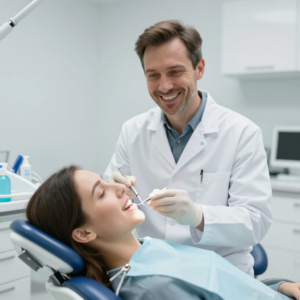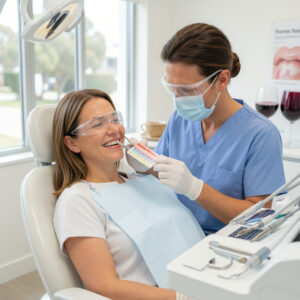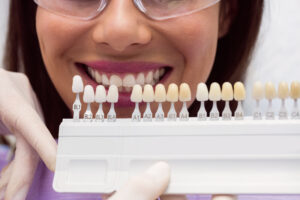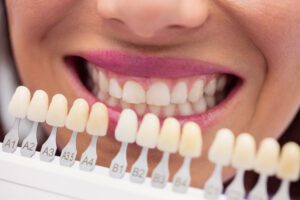
Enamel veneers are thin coverings bonded to the front surface of a tooth to improve colour, shape, and symmetry while preserving as much natural tooth structure as possible. They work best when we can bond primarily to healthy enamel and design the veneers to suit your bite. In our clinical experience, veneers are most predictable when they are planned conservatively, not rushed, and chosen because they are the right solution, not simply the fastest cosmetic change.
Quick Answers
1) Do veneers damage enamel?
Veneers do not automatically damage enamel, but they do permanently change the tooth surface if preparation is required. We aim to keep reduction minimal and mostly within enamel so the bond is stronger and more predictable. The real risk comes from over preparation, poor bite planning, or untreated grinding.
2) Are no prep veneers always the best option?
No prep veneers can be excellent in the right case, but they are not universally better. If there is not enough space, adding material can look bulky, irritate gums, and create bite interferences. Minimal prep is often safer because it creates room for natural contours and a stable, cleanable margin.
3) Can I get veneers without shaving teeth?
Sometimes. Veneers without shaving teeth may suit smaller teeth, teeth that sit slightly back, or cases with natural spacing. If teeth are already forward, crowded, or the bite is tight, no prep veneers can compromise gum health and aesthetics. We only recommend no prep when your anatomy truly allows it.
4) Minimal prep veneers Australia: what are the main pros and cons?
The main benefit of minimal prep veneers is conserving enamel for strong bonding while achieving natural thickness and shape. The downside is that minimal prep has limits. If major alignment change or a dramatic shade shift is required, minimal prep may not provide enough space, and other options may be more suitable.
5) Do no prep veneers have downsides?
Yes. No prep veneers can increase plaque retention if the veneer is over contoured at the gumline. They can also make teeth look thicker and can worsen bite contacts if space is limited. When we see these risks, we usually recommend minimal prep or an alternative approach for a healthier result.
What are enamel veneers
Enamel veneers are thin restorations bonded to the front of a tooth. The word “enamel” matters because bonding to enamel is typically more reliable than bonding to dentine. When we can keep preparation primarily in enamel, veneers are usually more stable over time and less likely to debond.
Veneers are commonly used to address:
- chips and edge fractures
- worn or uneven incisal edges
- mild spacing or minor tooth shape discrepancies
- stubborn discolouration that whitening cannot fully correct
- small surface defects or uneven texture
Veneers are not “one size fits all”. Before recommending them, we consider whether a less invasive option can achieve your goal. Sometimes that is whitening, alignment, or conservative bonding. Sometimes it is veneers. The decision depends on your enamel, gum health, and bite.
If you would like a general consumer overview of veneers in Australia, Healthdirect provides a helpful explanation: Healthdirect guide to veneers.
How enamel veneers work
A veneer changes the outward appearance of a tooth while respecting the tooth underneath. It can alter colour, contour, and edge position, but it relies on a strong bond and good functional design.
The bonding principle
For veneers to perform well, we need:
- healthy enamel where the veneer will bond
- controlled moisture during bonding for predictable adhesion
- a cleanable margin that supports gum health
- bite compatibility so the veneer edge is not overloaded
When any of these are compromised, problems are more likely, such as sensitivity, edge chipping, gum inflammation, or debonding.
What veneers can and cannot change
Veneers can improve:
- tooth colour and brightness within natural limits
- symmetry and proportion
- minor gaps and small rotations
- worn edges and chipped enamel
- surface texture and light reflection
Veneers cannot reliably fix:
- active gum disease or untreated decay
- moderate to severe crowding without significant tooth reduction
- heavy clenching or grinding without a protection strategy
- an unstable bite without careful functional planning
This is why online claims about “instant perfect smiles” can be misleading. A predictable veneer plan is one that prioritises tooth health and function first.
Treatment options
Patients often search minimal prep veneers Australia or do veneers damage enamel because they want a conservative solution. We approach this by selecting the least invasive option that still produces a stable, natural result.
No prep veneers
No prep veneers may be possible when there is room to add veneer thickness without creating bulk.
When they may suit
- teeth are slightly set back or smaller in width
- there is spacing that needs gentle closing
- gum margins are stable and easy to clean
- your bite has clearance for added thickness
No prep veneers pros and cons
- Pros: may avoid drilling, preserves enamel, often minimal sensitivity risk
- Cons: can look bulky if space is tight, can irritate gums if margins are over contoured, can create bite interferences, can limit shade control in very thin ceramics
Minimal prep veneers
Minimal prep means we create small amounts of space so the veneer can be the right thickness and shape. The goal is often to keep preparation mostly within enamel.
When we may recommend minimal prep
- chipped edges or uneven lengths
- mild crowding where slight reshaping improves alignment
- mild to moderate shade improvement
- creating a natural transition at the gum margin
Minimal prep is often the practical middle ground. It is conservative, but it avoids the bulk risks of no prep in tight bites.
Traditional veneers
Traditional veneers involve more reduction when we need space for larger changes.
When they may be needed
- a significant shade change where more ceramic thickness is required
- teeth that are very rotated or prominent, needing space to correct contour
- existing large fillings that affect colour and shape
- achieving a specific edge position for a balanced smile line
Traditional does not mean aggressive by default. The aim is still conservation, but we plan realistically around what is required to achieve the goal safely.
Composite veneers and bonding
Composite can be an excellent option, especially when the changes are small or you want a more repairable approach.
When composite may suit
- small chips and edge wear
- minor shape refinement
- transitional smile improvements before porcelain
- cases where conservative additions can solve the problem without ceramic
Composite typically needs more ongoing polishing and stain management, but it can be a very effective and conservative tool when well planned.
Alternatives we often consider first
Depending on your goals and enamel condition, we may discuss:
- whitening for surface staining
- orthodontic alignment before veneers
- targeted bonding for single tooth defects
- gum health stabilisation before any cosmetic work
- crowns only when a tooth is heavily compromised
For an Australian dental association overview of veneers in the context of restorative options, you can read: ADA information on crowns, bridges and veneers.
Step by step procedure
A veneer plan should feel structured and predictable. A typical process includes the steps below. Exact appointments vary depending on whether we are using composite, porcelain, or a staged plan.
- Assessment and records
We examine enamel thickness, wear patterns, gum health, decay risk, existing restorations, and bite forces. Photos and scans help us plan symmetry and shade. - Smile planning and option selection
We discuss your goals and match them to a conservative plan: no prep, minimal prep, traditional, composite, or alternatives. We also plan the sequence if whitening or alignment is recommended first. - Trial smile phase (when appropriate)
For more visible cases, a mock up or temporary trial can help confirm shape, speech comfort, and overall look before we finalise ceramics. - Tooth preparation (if required)
Minimal prep may involve small enamel reshaping to create space and smooth transitions. We aim to preserve enamel for bonding wherever possible. - Scan or impression and shade selection
We capture precise details for the laboratory and choose a shade that suits your complexion and existing teeth. We also plan translucency and surface texture so the result looks natural. - Temporaries (case dependent)
Some cases require temporary veneers for comfort and aesthetics while ceramics are crafted. - Try in and bite check
We assess fit, margins, shade, and bite contacts before bonding. This step reduces the risk of unexpected bulk, uneven edges, or bite interference. - Bonding and finishing
We isolate the teeth, prepare the enamel surface, apply bonding protocols, seat veneers, cure, then polish margins and adjust bite as needed. - Review and maintenance plan
We review cleaning technique, bite contacts, and habits like nail biting or ice chewing. If you grind, we discuss protective strategies and ongoing monitoring.
Comparison table
| Option | Enamel removal | Best for | Main advantages | Main limitations |
| No prep veneers | None or minimal | Small or set back teeth, mild spacing | Preserves enamel, often minimal sensitivity | Can look bulky, may irritate gums, bite clearance must be adequate |
| Minimal prep porcelain veneers | Low, mostly enamel | Chips, mild gaps, subtle shape and shade refinement | Strong enamel bond, natural contours, stain resistance | Still permanent, limited correction in severe crowding or shade change |
| Traditional porcelain veneers | Moderate, case dependent | Larger shape or colour change, rotated or prominent teeth | Greater control over shade and contour | Higher risk of dentine exposure, more technique sensitive |
| Composite veneers | Usually minimal | Minor reshaping, edge wear, cost sensitive plans | Repairable, conservative additions, often fewer visits | More staining and maintenance, typically shorter longevity |
| Crowns (not veneers) | Higher | Heavily damaged teeth | Full coverage strength | Less conservative, used when tooth structure demands it |
Risks and suitability
Veneers can be safe and predictable when case selection is right. The most common problems we see in veneer failures are not about the ceramic itself. They are about enamel availability, bite forces, gum health, and unrealistic expectations.
Risks and limitations
- Sensitivity after preparation or bonding, often temporary
- Edge chipping or fracture, more likely with grinding or edge biting habits
- Debonding, higher risk when bonding to dentine rather than enamel
- Gum irritation, often linked to bulky contours or margins that trap plaque
- Colour mismatch, if shade planning is rushed or whitening is done later
- Irreversibility, because any preparation is a permanent change
Contraindications and situations requiring caution
We are more cautious with veneers when you have:
- active gum disease or frequent bleeding
- untreated decay or high decay risk
- severe erosion or very thin enamel
- large existing fillings on front teeth that reduce enamel bonding area
- heavy clenching or grinding without a protection plan
- an edge to edge bite that overloads front teeth
When urgent care is needed
Seek prompt dental care if you experience:
- facial swelling or spreading gum swelling
- severe toothache that persists or worsens
- a cracked tooth with sharp pain on biting
- a veneer fracture that cuts soft tissue
- signs of infection such as fever with dental pain
When monitoring is appropriate
A planned review is often appropriate for:
- mild sensitivity that is improving over days
- a rough edge that needs polishing
- early bite awareness without significant pain
- slight gum tenderness after placement that improves with cleaning
Cost in Australia
Veneer costs vary because veneers are individually designed restorations. The most meaningful question is not only “cost per tooth” but what is included in the plan and what is required to keep the result stable.
Typical cost drivers
- Material choice: composite vs porcelain and the ceramic system used
- Laboratory work: complexity, layering, and quality control
- Case planning: records, mock ups, and trial smiles
- Tooth condition: wear, cracks, existing restorations
- Bite risk: grinding, edge to edge bite, protective appliances
- Number of veneers: single tooth matching vs multiple teeth for symmetry
- Aftercare: reviews, polishing, and bite refinements
Why “no prep” is not automatically cheaper
Even when we do not drill, careful planning is still required to avoid bulky contours and gum inflammation. The clinical time in assessment, design, and fit checks often matters more than whether a drill touches enamel.
A practical way to compare options
When comparing quotes or plans, it helps to ask:
- Is the plan preserving enamel where possible?
- How is the bite being assessed and protected?
- What is the maintenance plan for cleaning and reviews?
- What happens if a veneer chips or debonds?
- Are alternatives discussed if veneers are not the safest option?
A conservative plan that is designed to last is usually better value than a faster plan that requires frequent repairs.
How Dentists Assess Suitability and Choose the Right Veneer Option
At Complete Smiles, our approach is to match your goals to the least invasive option that still produces a stable, natural outcome. We base this on enamel, gums, function, and the type of change you want.
1) Enamel assessment
We check:
- enamel thickness and wear patterns
- erosion, cracks, and edge breakdown
- how much bonding surface is enamel vs dentine
- whether existing fillings reduce predictable bonding area
If enamel is thin or erosion is active, we may prioritise stabilisation and protective strategies before veneers.
2) Gum health and cleanable margins
Veneers must support gum health. We evaluate:
- inflammation and bleeding points
- recession risk
- whether the planned veneer contour will be easy to clean
- whether gum symmetry needs management before cosmetic work
3) Bite and functional risk
Function is often the difference between veneers that last and veneers that fail early. We assess:
- clenching and grinding habits
- edge to edge or heavy front tooth contacts
- guidance patterns when you move your jaw
- whether protective measures are indicated
4) Shade planning and sequencing
If whitening is part of your goal, we discuss timing first. Whitening after veneers can create mismatch because veneers do not change colour. In many cases, we recommend establishing the natural tooth shade first, then matching veneers.
5) Selecting the right option for your case
We weigh:
- no prep vs minimal prep vs traditional
- composite vs porcelain
- staging with alignment or whitening
- whether a trial smile phase would reduce risk and improve confidence
If you want to explore veneer options in more detail, you can see the scope of care we provide on our dentistry services page.
What This Means for Patients in Rozelle, NSW
In Rozelle, we often see veneer enquiries from patients who want natural improvement rather than an artificial bright finish. Local lifestyle and dental patterns can influence planning.
- Staining patterns: Coffee, tea, red wine, and certain foods can cause external staining. Sometimes whitening plus conservative bonding achieves the goal without committing to veneers.
- Busy schedules and stress: Clenching and grinding can be common. If we identify this, we plan veneer edges and bite contacts carefully and discuss protection strategies.
- Mixed restorations: Many adults have older fillings on front teeth. This can affect shade matching and the amount of enamel available for bonding, which influences the choice between composite and porcelain.
- Tight bite relationships: A tight bite can make no prep veneers unsuitable because added thickness risks interference and chipping.
If you are unsure whether veneers are appropriate, a structured assessment is the safest way to avoid regret. For appointment and timing questions, our contact page can help you reach our team.
Conclusion
Enamel veneers can be a conservative, long lasting way to improve tooth colour, shape, and edge wear when they are bonded to healthy enamel and designed to suit your bite. The most important decision is not whether veneers are labelled “no prep” or “minimal prep”. It is whether your enamel, gum health, and function make veneers predictable, and whether a less invasive option could achieve the same goal.
Book an appointment
If you are considering enamel veneers and want a plan that prioritises enamel preservation, bite stability, and natural aesthetics, we can assess your options at Complete Smiles in Rozelle, NSW. Start at our homepage, review veneer related options within our services, then book online via our appointment page.
FAQ
1) Are enamel veneers the same as porcelain veneers?
Not exactly. “Enamel veneers” describes where the veneer is bonded, not only what it is made from. Porcelain veneers are commonly bonded mainly to enamel, which supports strong adhesion. If enamel is thin or heavily restored, bonding may involve dentine and the risk profile changes.
2) Do minimal prep veneers last as long as traditional veneers?
They can, especially when bonding remains mostly on enamel and the bite is well managed. Longevity depends on enamel quality, bonding technique, and functional loading. Minimal prep often helps preserve enamel, but it is not a guarantee. Case selection and bite design matter most.
3) Can veneers fix crooked teeth without orthodontics?
Veneers can visually improve mild crowding or uneven edges, but they do not move teeth. If misalignment is moderate to severe, veneers may require more reduction to create alignment, which increases risk. In those cases, we often discuss orthodontic alignment first to keep veneer preparation conservative.
4) What if I grind my teeth at night?
Grinding increases the risk of veneer chipping, cracking, and debonding, particularly at the edges. If we identify grinding, we design veneers to reduce stress and adjust bite contacts carefully. We also discuss protective strategies and monitoring because wear patterns and bite contacts can change over time.
5) Are no prep veneers safe for everyone?
No. No prep veneers can be safe in carefully selected cases, but they can also cause bulkiness, gum irritation, and bite problems when space is limited. If teeth are already prominent or the bite is tight, adding veneer thickness can increase risk. Suitability requires a clinical assessment.
6) Do veneers make teeth look unnaturally white?
They do not have to. A natural result depends on shade selection, translucency, surface texture, and how veneers harmonise with surrounding teeth and facial features. Very bright or overly opaque veneers can look artificial. We plan colour and texture for realism, not just brightness.
7) Can I whiten my teeth after veneers are placed?
You can whiten natural teeth, but veneers do not change colour with whitening. If you whiten after veneers, the natural teeth may lighten and the veneers may look darker by comparison. If you want a brighter overall smile, we usually discuss whitening before veneers to stabilise the final shade.
8) Are composite veneers a good alternative to porcelain?
Composite veneers can be an excellent alternative for minor reshaping, edge wear, or small chips. They are more repairable and can often be completed in fewer visits. The trade off is that composite tends to stain more and may need more maintenance polishing or earlier replacement than porcelain.
9) How many teeth usually need veneers?
The number depends on your smile width and what shows when you speak and smile. Some patients need a single veneer to restore a chipped tooth, while others need several upper front teeth to balance symmetry. We plan the number to avoid obvious mismatches and to keep the result cohesive.
10) What maintenance do veneers need?
Maintenance includes thorough brushing and flossing, regular dental reviews, and professional cleaning to keep margins healthy. We also monitor bite contacts, as changes over time can place stress on veneers. Avoid biting hard items with veneer edges and do not use teeth as tools. Protection may be discussed.